
Change your browser to Desktop Site format for preferable newsletter layout

HFEM Newsletter | February 2026 | Page 3
HFE Columnist
Essential Leadership Skills for Improving Safety Climate
In numerous Malaysian workplaces, the discourse surrounding safety is predominantly framed as a compliance-driven endeavour: adherence to regulations, successful audit completions, and incident prevention. However, extensive safety research and empirical observations underscore a more nuanced reality: safety climate is significantly influenced by leadership behaviours rather than mere procedural adherence (Haas & Yorio, 2021; Vinodkumar & Bhasi, 2010). The actions, communications, tolerance levels, prioritization, and modelling exhibited by leaders convey crucial messages regarding the organizational norm of safety practices.
Safety climate encompasses the collective perceptions employees hold about the priority given to safety within their organization. It surpasses mere safety procedures, training, and inspection; rather, it is cultivated through the daily interactions and behaviours demonstrated by leaders and their teams. Whether operating within manufacturing environments, construction, laboratories, or agriculture, leadership behavior emerges as the most powerful mechanism shaping safety attitude and response patterns.
What are the critical leadership competencies and skills required, particularly in the lenses of change and transformational leadership, that can effectively enhance the safety climate within Malaysian industrial and academic landscapes? By fostering a robust safety culture through strategic leadership practices, organizations can achieve meaningful and lasting improvements in their safety performance.
Practical Strategy on Real-World Scenario
Scenario 1: Production Pressure vs Safety
A supervisor notices operators bypassing a machine guard to speed up output. The monthly target is tight, and downtime is frowned upon. The supervisor remains silent because “we cannot miss today’s target.”
Signal sent to workers: Production matters more than safety.
Action shall be taken: Stop the unsafe practices and enforce the safety protocol. Intervention of machinery operation to prevent bypassing activities.
Scenario 2: Near-Misses Not Reported
A technician experiences a near-miss involving a chemical splash but chooses not to report it because incident reporting is met with blame and lengthy investigations.
Signal sent to workers: Speaking up brings trouble.
Action shall be taken: Encourage near-miss reporting with a reward (physical or psychological enforcement). Develop a NO BLAME culture.
Scenario 3: New Staff Orientation
New workers report for duty, but line leaders rush them into production without reinforcement of safety orientation. SOPs are technically explained but not demonstrated in practice.
Signal sent to workers: Safety training is a formality, not reality.
Action shall be taken: Establish an orientation training and on-the-job training (OJT) monitoring program to ensure no bypassing is allowed in any circumstances.
Scenario 4: Broken Tools or Machinery Breakdown
Workers continue to work on broken tools or malfunctioning machinery under self-DIY repair conditions. The supervisor remains silent due to budget constraints.
Signal sent to learners: Safety is optional when budgets are tight.
Action shall be taken: Establish a preventive and predictive maintenance program, and enhance awareness of employees’ rights not to work under unsafe conditions.
In the scenarios discussed, the issue is not the absence of rules, but the lack of consistent leadership signals. We have identified five crucial transformational leadership skills needed to develop and reshape your organization’s safety culture.
1. Visible Safety Commitment (Role Modelling): Transformational leaders influence behaviour through example. When leaders:
• Stop unsafe work even during peak production
• Wear PPE correctly
• Ask safety questions during site walks
They reinforce that safety is a core value, not a checkbox. In the Malaysian context, where hierarchical leadership is common, leaders’ speech and actions carry more weight than policies do.
Practical shift: Leaders conduct short, regular “safety walks” focused on listening rather than policing.
2. Creating Space to Speak Up (Psychological Safe Space): Many unsafe acts persist because workers fear being blamed. Effective change through creating an environment where:
• Near-misses are treated as learning opportunities
• Reporting is appreciated, not punished
• Mistakes trigger improvement, not embarrassment
• Establish a whistleblowing policy, reporting the wrongdoing, unsafe acts, and noncompliance without risks
This aligns with the shift encouraged under Malaysia’s Occupational Safety and Health Act 1994 (Amendment 2022), which emphasises shared responsibility and proactive risk management.
Practical shift: After any near-miss report, leaders publicly thank the reporter and share what was learned (without naming or blaming). Plan, implement, and communicate all OSH-related improvement plans to all workers to continue to encourage continuous reporting.
3. Safety Conversations, Not Safety Commands
Traditional safety leadership often relies on instruction: “Follow the SOP.” Transformational leadership uses dialogue:
• “What makes this task difficult to do safely?”
• “If you were the manager, what would you change here?”
• “What stops people from reporting hazards?”
• “Why is the safety procedure being important?”
These questions shift workers from passive compliance to active ownership. In academic settings, this also builds safety thinking into professional identity—not just exam knowledge.
Practical shift: Supervisors and management staff hold 5-minute safety conversations during toolbox meetings and any management meeting, focusing on reviewing one real risk from the last week or on a simple safety sharing session.
4. Aligning Safety with Operational Goals: Safety is often perceived as slowing down productivity. Change leaders reframe safety as an enabler, as
• Fewer injuries = less downtime
• Better ergonomics = higher productivity
• Fewer incidents = stronger organizational reputation
This alignment helps resolve the “safety vs production” tension commonly experienced in Malaysian SMEs and large industries alike.
Practical shift:
Include one safety leading indicator (e.g., near-miss reporting trend) alongside production KPIs in management reviews rather than focusing on a lagging indicator (e.g., total accident cases)
5. Building Capability, Not Just Compliance: to improve safety climate, leaders must invest in:
• Coaching his subordinate on how to influence behaviour
• Developing safety leadership skills, not only technical safety knowledge
• Integrating human factors, ergonomics, and psychosocial risk awareness into daily management
• Encourage workers to develop stewardship and uphold more responsibility toward their own safety and their colleagues.
• Increase the affective commitment of employees toward the company
• Increase the maturity level of the safety climate from mere to ensure the conduct of a compliance-based program to a more advanced, well-being-focused, and preventive type of safety program.
This reflects a more mature safety approach aligned with DOSH guidelines and international standards, moving beyond accident statistics to preventive leadership practices.
Practical shift: Provide effective leadership training for leaders on “how to correct unsafe behaviour without blaming”, “how to encourage safety with effective communication skills”, “how to prevent occupational risk through hazard prevention”, etc.
The HR department can establish KPIs for affective commitment to survey and review whether management staff perform and encourage more organizational behaviour among employees through effective communication and interaction
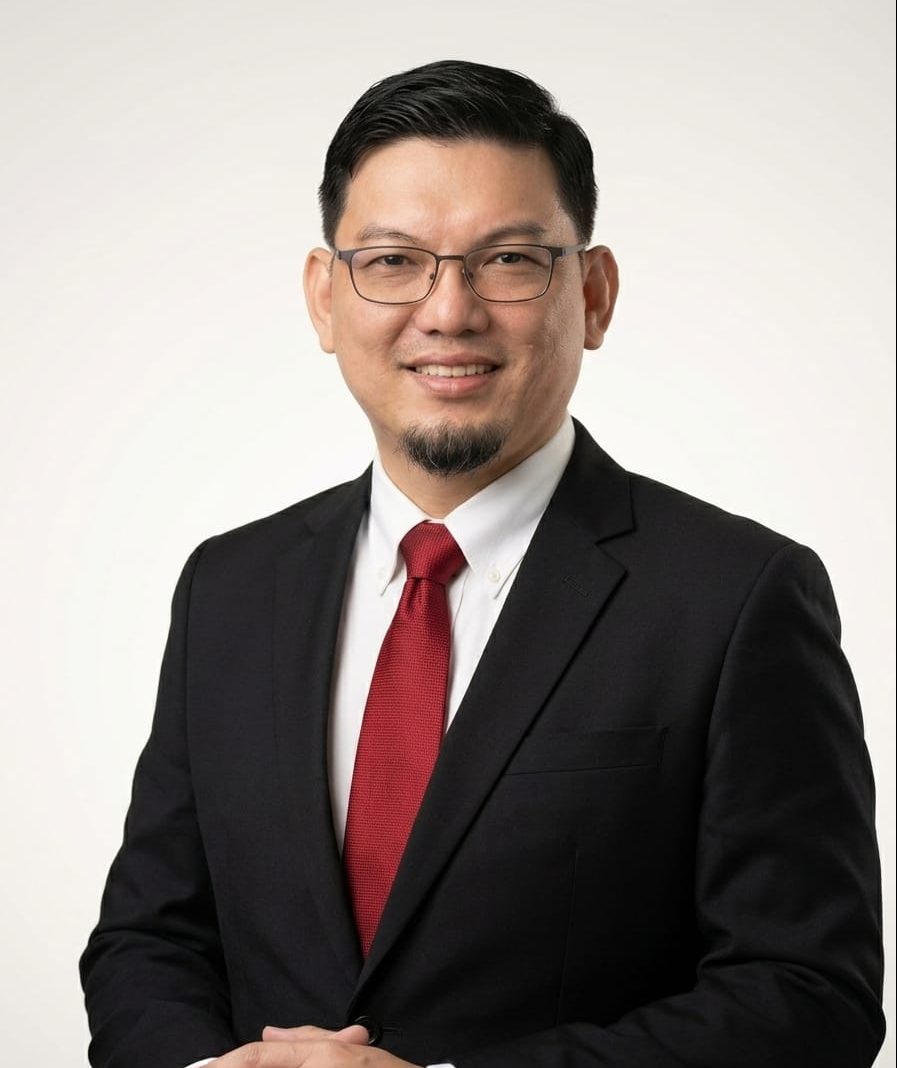
Mr. Irsyad Danish Khor
Manager HFEM Academy
What This Means for Industry and Academia
For industry stakeholders, the behaviour of leaders plays a pivotal role in shaping incident trends, fostering a culture of transparent reporting, and influencing long-term safety performance outcomes. In academia, the way leadership is demonstrated profoundly affects how aspiring engineers, supervisors, and safety professionals internalize essential safety values and develop risk perception. These two domains are interconnected: graduates often bring the leadership styles and habits they have learned into their professional environments, while industry expectations and standards can significantly alter academic focus and priorities. Thus, fostering an improved safety climate requires harmonized, consistent leadership messaging that effectively bridges practical application and educational initiatives.
Reflections for Industrial and Academic Leaders
• When production pressure rises, what signals do my actions send about safety priorities?
• Do people in my organization feel safe to speak up about hazards and near-misses?
• How often do I talk with people about safety, rather than at them?
• What small or big influences from me this month can improve the safety climate?
• What can I do to improve and enhance the maturity level of safety climate?
• Am I developing future leaders to value safety as a leadership responsibility, not just a technical requirement?
Improving the safety climate is not about having better rules and stricter compliance monitoring and performance, but about becoming a better leader. When leaders consistently demonstrate care and fairness and walk their talk, safety becomes part of “how we do things here,” not just “what the rules say.”

HUMAN FACTORS AND ERGONOMICS SOCIETY MALAYSIA
Level 3 & 4, Wisma Suria, Jalan Teknokrat 6, Cyber 5, 63000 Cyberjaya, Selangor, Malaysia
Phone: 03-8314 3360 E-mail: secretary@hfem.org