

 OFFICIALLY OPENING HFES 2026
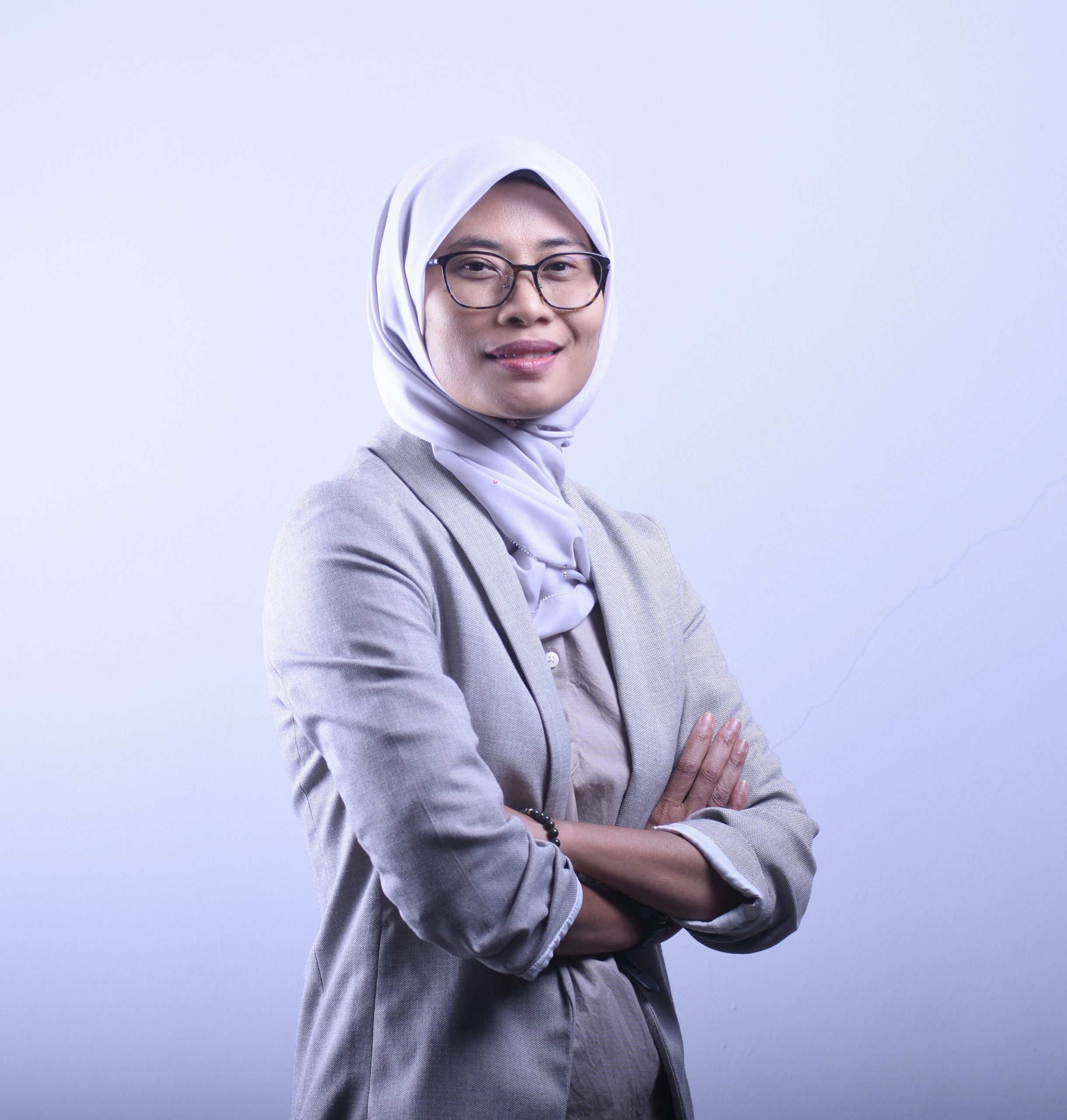
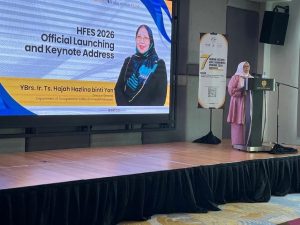
HFES 2026 was officially officiated by YBrs. Ir. Ts. Hajah Hazlina binti Yon, Director General of the Department of Occupational Safety and Health (DOSH/JKKP) Malaysia. Her address challenged the traditional understanding of ergonomics as simply a matter of posture or physical discomfort:
“Ergonomics tidak lagi terhad kepada membetulkan postur fizikal atau mengurangkan kesakitan otot semata-mata.”
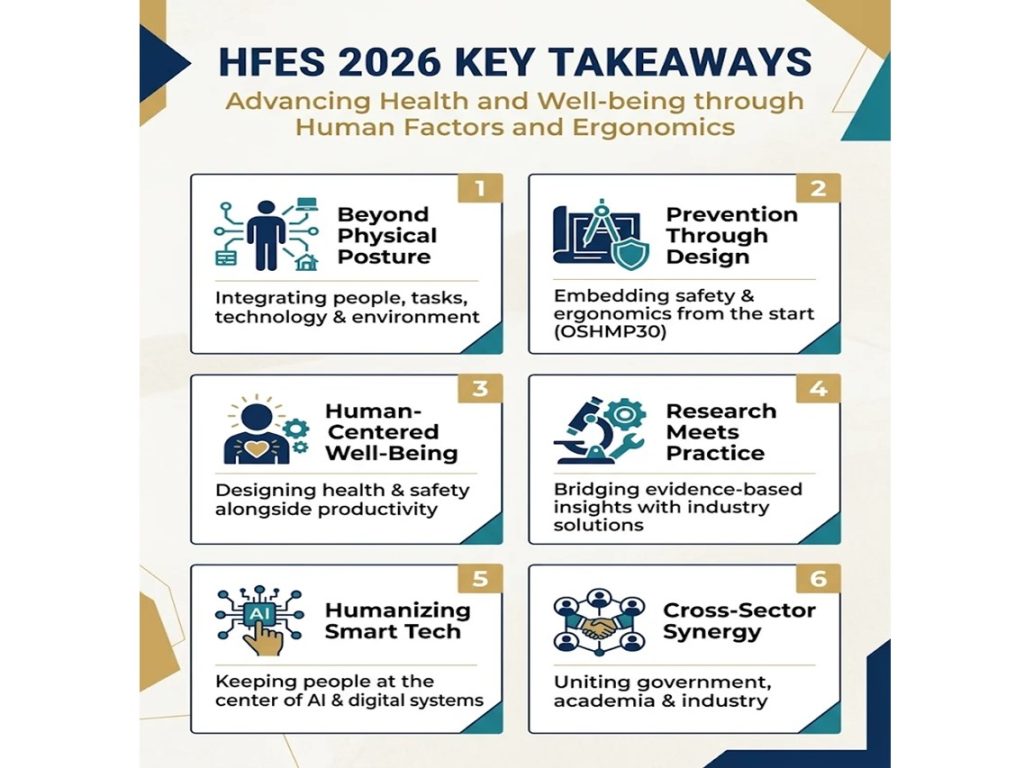
Instead, ergonomics must be understood as a broader approach that integrates people, tasks, technology, organisation and environment. Her address also highlighted the growing concern surrounding occupational diseases and musculoskeletal disorders, reinforcing the importance of moving from reactive solutions towards prevention and design-led intervention.
A key message was the importance of embedding occupational safety, health and ergonomics from the earliest stages of design:
“…menerapkan elemen keselamatan dan kesihatan pekerjaan, termasuk aspek ergonomik, seawal peringkat reka bentuk.”
This perspective aligns strongly with the principles of Prevention Through Design and the national direction outlined through OSHMP30. The message was clear:
Safer work does not begin after an incident. It begins with how we design work.
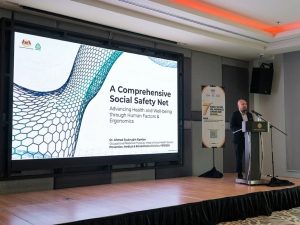 KEYNOTE: PEOPLE AT THE CENTRE OF WORKPLACE WELL-BEING
The PERKESO keynote session by Head of Social Health Section, Dr Ahmad Syarifuddin Ramlan, further broadened the conversation towards workplace health, safety and well-being.
The session highlighted the importance of strengthening preventive approaches and creating working environments that support not only productivity, but also the health, safety and long-term well-being of people.
It reinforced a fundamental principle of Human Factors and Ergonomics:
Well-being should not be an afterthought. It should be designed into work.
FOUR INVITED VOICES, FOUR PERSPECTIVES
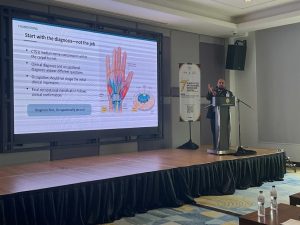
HFES 2026 also featured four invited speakers: 1. Mr Go Chang Hua, Pe&T PETRONAS HSEQ Manager (Management System), PETRONAS; 2. Ir. Ts. Md Idris Salim, Head of Global Compliance and Assurance, Group QHSSSE, Vantris Energy Berhad (formerly Sapura Energy Berhad); 3. Datin Dr Zaharah Omar, Head of Human Capital and Corporate Affairs, Elektrisola (Malaysia Sdn Bhd); and 4. Dr Muhammad Irfan Mohd Sallehhudin, Department of Public Health Medicine, Universiti Teknologi MARA Sungai Buloh, bringing practical insights and industry perspectives into the conversation. Their sessions demonstrated how Human Factors and Ergonomics can be applied across different contexts from workplace practices and organisational environments to emerging technologies and human-centred systems. Together, the invited sessions strengthened the bridge between what we know through research and what we do in practice. Research becomes more meaningful when it meets real-world problems. Practice becomes stronger when it is informed by evidence.
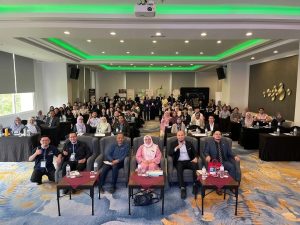 BEYOND THE SEMINAR
HFES 2026 was not simply about presentations and discussions. It was about creating connections. It was about bringing different communities into the same room. And most importantly, it was about asking better questions about how we design the future of work. As technology becomes smarter and workplaces become more complex, the role of Human Factors and Ergonomics becomes increasingly critical. Because ultimately, technology can be intelligent, but systems must still be human. HFES 2026 therefore represents another step towards a future where safety is designed, accessibility is considered, well-being is prioritised, and people remain at the centre of innovation.
 APPRECIATION
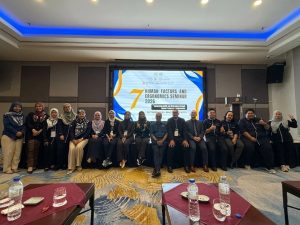
HFEM Malaysia extends its sincere appreciation to all speakers, paper presenters, participants, partners, supporting organisations and the entire organising team for making HFES 2026 a meaningful platform for knowledge exchange and collaboration. Special appreciation goes to the HFES 2026 Chair, Dr Faizzuddin Razali, for his leadership, coordination and commitment in bringing the seminar together. Our appreciation also goes to the Co-Chair & Scientific Chair, Assoc. Prof. Ts. Dr Aslina Baharum, for her contribution to the scientific direction, research engagement and overall development of the programme. The successful delivery of HFES 2026 reflects the collective effort of the organising committee, whose dedication brought together government, industry, academia and professional communities around a shared human-centred agenda. One seminar. Six research voices. Multiple perspectives. One shared purpose. To advance Human Factors and Ergonomics—not only as a discipline, but as a catalyst for healthier, safer and more human-centred workplaces.